
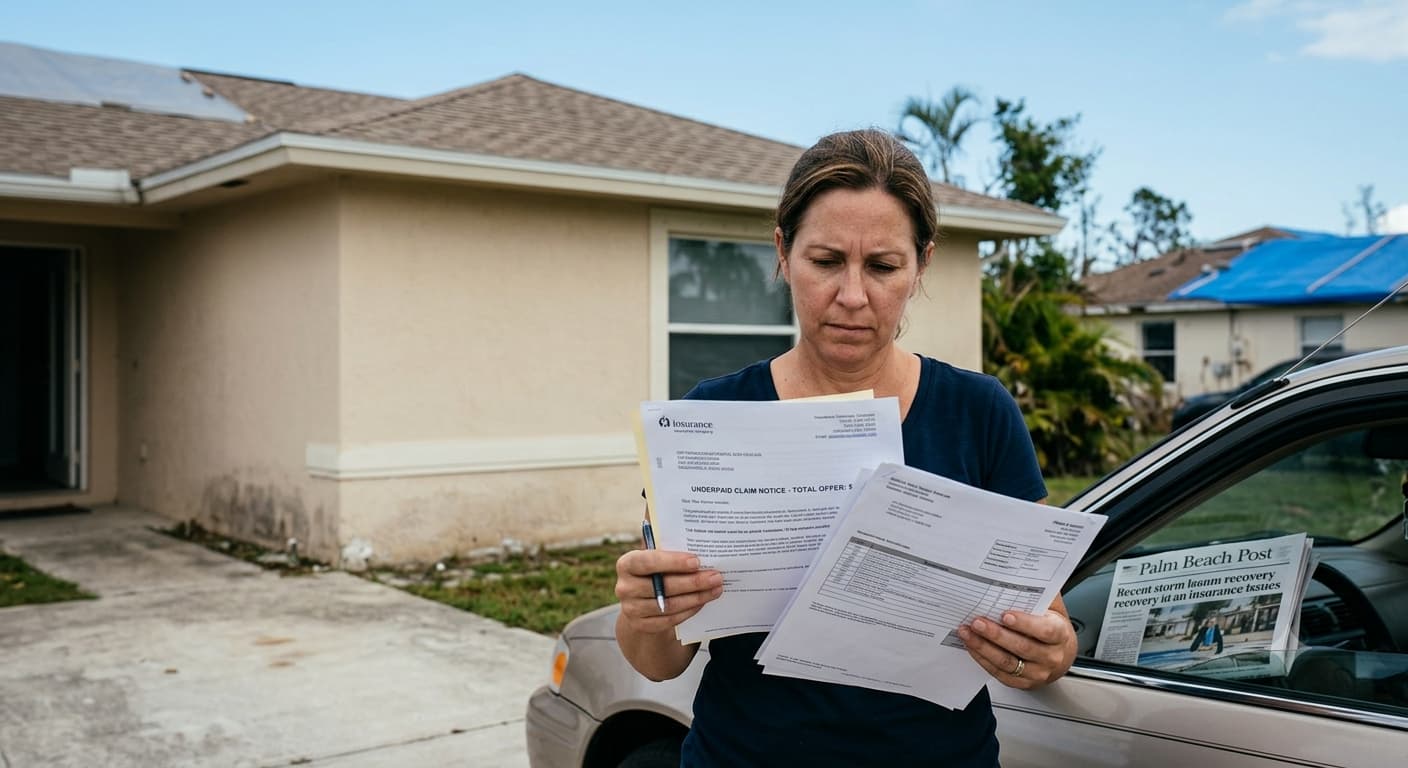
When a settlement check arrives from your insurance company, it feels like the end of the process. For many homeowners across Parkland, Coral Springs, and Boca Raton, it is actually the beginning of a different problem. Insurers settle claims quickly, and that speed often comes at your expense. An underpaid claim is one of the most common and least discussed issues in Florida’s property insurance market.
Here is the core issue. The insurer’s adjuster works for the insurance company. Their job is to process your claim within the carrier’s guidelines, not to maximize what you receive. That means missed damage, outdated pricing, and policy language that quietly trims your payout. Ryan Risteen and the team at Phoenix Claims Consulting help property owners across Broward and Palm Beach counties recover what they were actually owed. Here is how to tell if your claim fell short.
What ‘underpaid’ actually means
An underpaid claim is not the same as a denied claim. Your insurer acknowledged the damage and sent a check, but the amount was not enough to cover the necessary repairs. The damage is real and covered. The number is simply too low. That distinction matters, because underpayment is often easier to challenge than an outright denial, and many homeowners do not realize they can push back at all.
Six signs your settlement was too low
1. The adjuster was at your home for less than an hour
A thorough inspection after storm or water damage takes time. Roofs, attics, walls, and crawl spaces all need careful review. If the carrier’s adjuster breezed through in under an hour, there is a strong chance something was missed, and missed damage means a lower settlement.
2. Your contractor’s estimate is higher than the settlement
This is one of the clearest red flags. If a licensed contractor assessed your damage and their estimate significantly exceeds what the insurer paid, that gap needs an explanation. Usually it means the carrier’s scope was too narrow or its pricing was outdated for the Broward and Palm Beach markets.
3. They paid actual cash value instead of replacement cost
Many homeowners assume their policy covers full replacement. Insurers sometimes apply depreciation aggressively, paying only the actual cash value of damaged materials rather than what it costs to replace them. If you carry a replacement cost policy, your settlement should reflect current South Florida labor and material prices, not a depreciated value from years ago.
4. Visible damage was left off the estimate
Adjusters are not always roofing or water experts. They document the obvious and miss the secondary effects. This is especially common in water damage claims, where damage travels far from its source, and mold, structural issues, and interior moisture often surface weeks later. If those were not documented early, they may have been excluded entirely.
5. You got a lump sum with no itemized breakdown
You have the right to know exactly what your settlement covers. If the check arrived with no line-by-line breakdown, you have no way to verify that every damaged item was counted. Ask for the full scope of the loss document. If key areas are missing, that is grounds to push back.
6. You accepted the first offer without a second opinion
Insurers count on homeowners accepting the first offer. It arrives on official letterhead and feels final. It is not. In Florida, you have options to reopen or supplement a claim within certain timeframes. Accepting an initial settlement does not always mean you are out of options.
Why this happens so often in South Florida
Broward and Palm Beach counties generate enormous claim volume after every storm season. When carriers process thousands of claims at once, speed wins over accuracy, and homeowners absorb the difference. The data backs this up. A 2026 hurricane season claims analysis cited across the industry found that a large majority of residential claims after recent named storms were closed without any payment at all. Underpayment sits one step up from that: a check that looks like a resolution but does not cover the work.
A real example from the field
A common pattern looks like this. A homeowner receives an initial storm settlement that seems plausible until the contractor bids come in far higher. A licensed public adjuster re-examines the claim, documents the overlooked damage, prices the repair at current local rates, and negotiates directly with the carrier. The final settlement comes in at several times the original offer. The loss did not grow. The documentation closed the gap. That is the difference between a claim handled alone and a claim handled by an experienced advocate.
What a public adjuster does for an underpaid claim
Every underpaid claim is different, but the services we offer property owners typically include the following:
- Reviews your settlement and scope of loss line by line to find what was missed
- Re-inspects the property for secondary and hidden damage
- Reprices the repair using current Broward and Palm Beach labor and material rates
- Files supplemental claims for damage discovered after the initial payment
- Negotiates directly with your insurer so you do not have to
Property owners in Parkland, Coral Springs, and Boca Raton who work with Phoenix Claims Consulting pay nothing upfront. The firm is compensated as a percentage of the additional recovery it secures. If it does not recover more, there is no fee, so there is no risk in getting a second opinion.
Frequently Asked Questions
How do I know if my insurance claim was underpaid in Coral Springs?
The clearest signs are a contractor estimate that exceeds your settlement, visible damage left off the insurer’s scope, or a check with no itemized breakdown. A licensed public adjuster can review your claim at no cost and tell you whether there is room to recover more.
Can I reopen a claim after accepting a settlement in Florida?
In many cases, yes. Florida law allows supplemental and reopened claims within certain timeframes that depend on your policy and the date of loss. Contact a licensed public adjuster promptly to find out whether your claim is still eligible.
Does challenging an underpaid claim mean going to court?
Usually not. Most underpaid claims are resolved through documentation and negotiation, not litigation. A public adjuster handles the process for you and only involves an attorney if a claim genuinely requires legal action.
What areas does Phoenix Claims Consulting serve in South Florida?
From its Coral Springs office, the firm serves homeowners and property owners across Broward and Palm Beach counties, including Parkland, Coral Springs, Boca Raton, and surrounding communities.
Get a free review of your settlement
If your settlement does not feel right, trust that instinct. Contact Phoenix Claims Consulting for a free, honest review of your underpaid claim.
About the Author
Ryan Risteen is the owner and licensed public adjuster at Phoenix Claims Consulting, with over 17 years of experience representing Florida property owners. From the firm’s Coral Springs office, Ryan and his team advocate for homeowners and businesses across Broward and Palm Beach counties, including Parkland, Coral Springs, and Boca Raton, on hurricane, storm, water, and fire damage insurance claims. State License #P172623.
This article is for general information only and is not legal advice. Confirm current law and your policy deadlines before acting on any claim decision.