
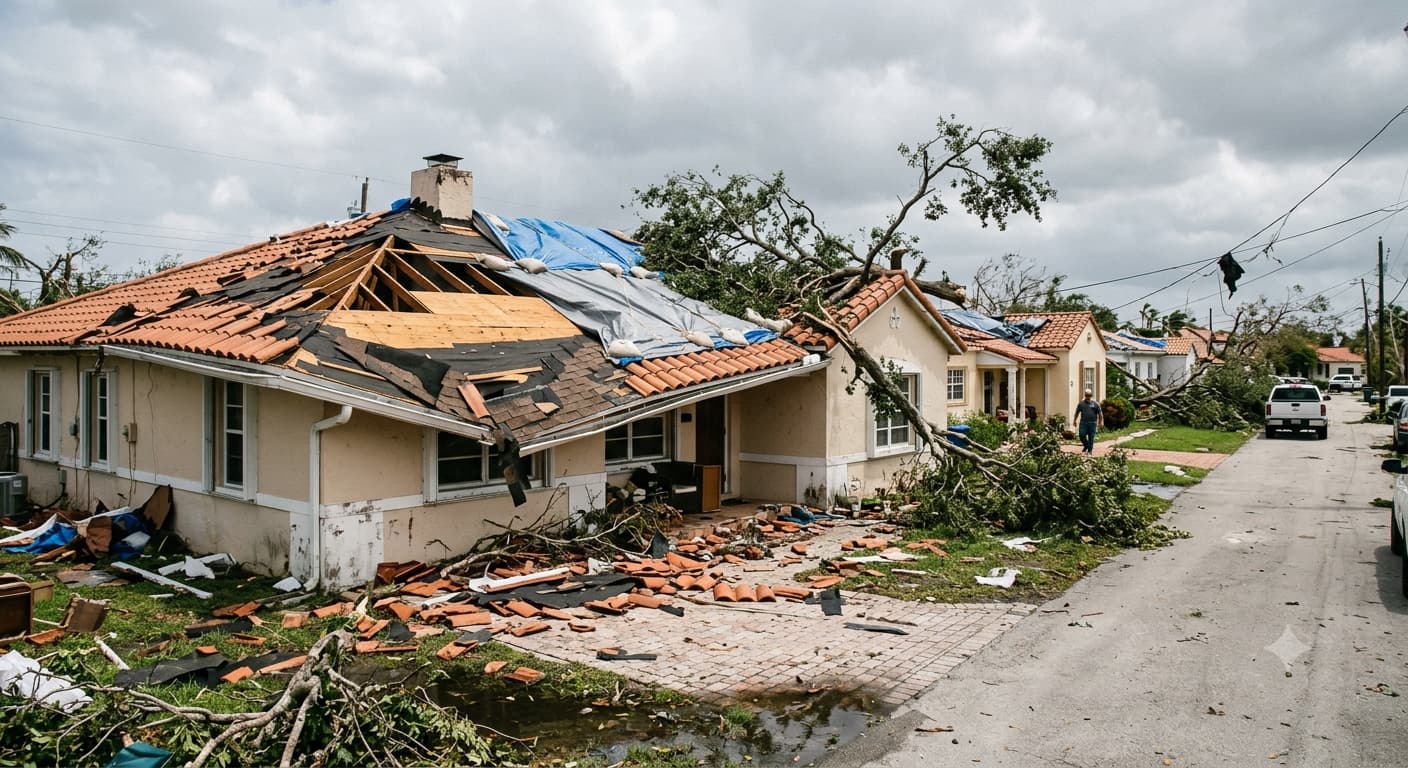
A denied roof claim is one of the most frustrating things a South Florida homeowner can face. You paid your premiums for years. A storm rolled through Parkland, Coral Springs, or Boca Raton and damaged your roof. Then your insurer came back with a denial or an offer so low it barely covers a patch job. If that has happened to you, you are not alone, and you are not necessarily out of options.
Roof claims are the single most disputed type of property claim in Broward and Palm Beach counties, and the same is true for many storm and wind damage claims homeowners file after major weather events. The good news is that most denials follow a small number of predictable patterns. Once you understand why insurers deny these claims, you can see where the leverage is. Ryan Risteen and the team at Phoenix Claims Consulting handle these disputes every week, and here is what actually drives them.
Why South Florida roofs take such a beating
This part is not complicated. South Florida sits in one of the most active wind and storm corridors in the country. Parkland borders the Everglades to the west, which means homes here catch both Atlantic hurricane systems and the heavy afternoon thunderstorms that build up over the interior. Coral Springs and Boca Raton see the same exposure. Wind uplift, wind-driven rain, and flying debris all punish roofs season after season. Damage is common. Fair payment for that damage is not.
The most common reasons a roof claim gets denied
- The insurer blames wear and tear instead of the storm
This is the most common denial of all. Your policy covers sudden, accidental damage from a covered peril like wind. It does not cover gradual deterioration. So insurers frequently classify legitimate storm damage as age, wear, or poor maintenance. The label lets them deny the claim. The problem is that distinguishing storm damage from wear requires real expertise, and the insurer’s adjuster works for the insurer, not for you.
- Your roof was older, and they used age as a shortcut
Roof age is one of the most contested issues in Florida property insurance. Florida law has limited the ability of insurers to refuse coverage based on roof age alone and gives homeowners with older roofs the right to an independent inspection establishing the roof’s remaining useful life. Life before a forced replacement. A bill in the 2026 session that would have expanded those roof age rules further did not pass, so the protections in force today come from earlier reforms. The key point stands: an older roof does not automatically void your claim, and you do not have to accept an age-based denial at face value.
- The damage was understated.
Insurance adjusters are not always roofing experts. When they inspect quickly, they document the most obvious damage and miss the rest. A few lifted shingles get noted while underlayment damage, flashing failures, and water intrusion go unrecorded, often the same water intrusion that turns into costly water damage claims down the line. If it is not in the scope, it does not get paid. A thorough inspection often finds several times more damage than the carrier’s first pass.
- The 25 percent roof rule was misapplied
Florida’s building code includes a provision that historically required a full roof replacement when more than a quarter of a roof was repaired or replaced within a year. Later reform created an important exception: if your roof was built or replaced to the 2007 Florida Building Code or later, only the damaged section generally needs to be brought up to current code. Insurers and contractors do not always apply this correctly, and the difference can be tens of thousands of dollars. A licensed contractor can pull permit records to confirm which category your roof falls into.
- You missed a deadline or a documentation step
Florida sets firm deadlines for notifying your insurer after a loss, and the clock is shorter than many homeowners realize. Miss the notice window and the insurer can deny on that basis alone, regardless of how real the damage is. This is one of the most painful and avoidable denials we see.
What the numbers say
This is not a fringe problem. A 2026 hurricane season claims analysis cited across the insurance industry found that a large majority of residential claims after recently named storms were closed without payment. Read that again. Most were closed, with the homeowner receiving nothing. That gap is rarely about whether damage existed. It is about how the claim was documented, measured, and presented to the carrier.
A real example
Consider a typical scenario from our files. A homeowner receives an initial storm settlement that falls far short of what the repair actually costs. The carrier’s adjuster spent under an hour on site and scoped only the visible shingle damage. A licensed public adjuster re-inspects, documents the underlayment and flashing damage the first adjuster missed, prices the repair at current local labor and material rates, and negotiates directly with the carrier. The final recovery comes in at a multiple of the original offer. The damage did not change. The documentation did.
What a public adjuster does that you cannot do alone
Performs a thorough roof and interior inspection using professional tools and methods
Builds a complete scope of loss that captures secondary and hidden damage, not just the obvious
Prices the repair using current Broward and Palm Beach County labor and material rates
Applies the correct roof code rules so you are not shortchanged on replacement
Negotiates directly with your insurer and files supplemental claims when more damage is found
Property owners in Parkland, Coral Springs, and Boca Raton who work with Phoenix Claims Consulting pay nothing upfront. The firm works on a contingency basis and is compensated as a percentage of what it recovers for you. If there is no additional recovery, there is no fee.
Frequently Asked Questions
Can I dispute a denied roof claim in Coral Springs after I already accepted a check?
Often, yes. Florida allows for supplemental and reopened claims within certain timeframes, depending on your policy and the date of loss. Accepting an initial check does not always close the door. A licensed public adjuster can review your file at no cost and tell you whether you are still within the window.
Does an old roof mean my claim will automatically be denied in Florida?
No. Florida law limits age-based denials and gives owners of older roofs the right to an independent inspection of remaining useful life before a forced replacement. An age-based denial is a starting point for negotiation, not the final word.
How long do I have to file a roof damage claim in Florida?
Florida sets a limited window to notify your insurer after a loss, with a separate, somewhat longer window for supplemental claims. The exact deadlines depend on your policy and the date of loss, and missing them can be fatal to a claim, so it is best to act quickly and confirm your dates with a professional.
What does it cost to hire a public adjuster in Boca Raton?
Phoenix Claims Consulting works on contingency. There are no upfront fees. The team is paid a percentage of the additional recovery it secures, so there is no financial risk to getting a second opinion on a denied or underpaid roof claim.
Get a free review of your denied roof claim
If your roof claim was denied or underpaid anywhere in Parkland, Coral Springs, or Boca Raton, trust your instincts and get a second opinion. Contact Phoenix Claims Consulting for a free review.
About the Author:
Ryan Risteen is the owner and licensed public adjuster at Phoenix Claims Consulting, with over 17 years of experience representing Florida property owners. From the firm’s Coral Springs office, Ryan and his team advocate for homeowners across Broward and Palm Beach counties. including Parkland, Coral Springs, and Boca Raton, on roof, storm, water, and fire damage insurance claims. State License #P172623.
This article is for general information only and is not legal advice. Confirm current law and your policy deadlines before acting on any claim decision.